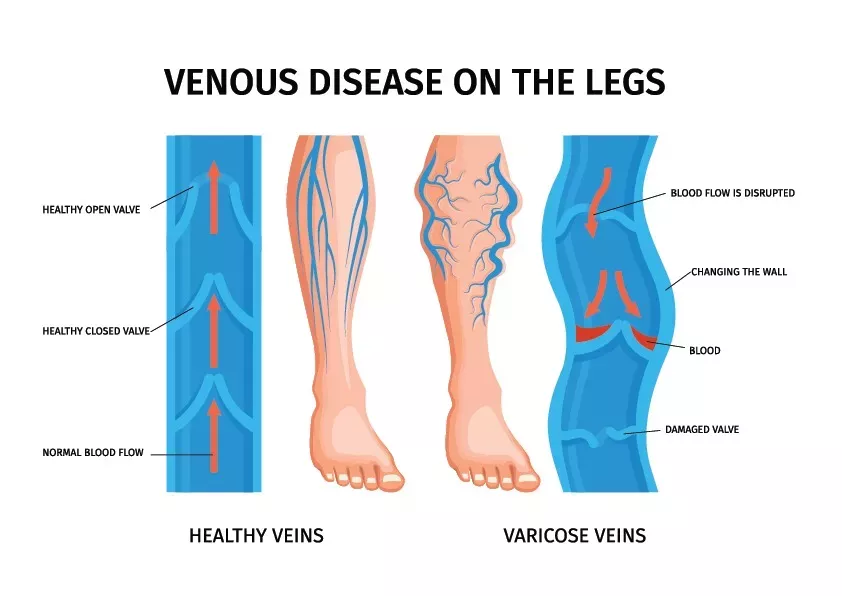
Varicose veins are a common vascular condition affecting millions of people worldwide. Characterized by swollen, twisted veins that often appear dark blue or purple, varicose veins typically develop in the legs due to poor circulation and weakened vein valves. While they may seem like a purely cosmetic concern, varicose veins can cause pain, swelling, heaviness, and even serious complications like ulcers and blood clots.
For decades, traditional treatments for varicose veins included vein stripping surgery, which involved physically removing the affected veins through incisions. However, this method was invasive, required longer recovery periods, and carried risks such as infection and nerve damage. Fortunately, medical advancements have led to the development of laser treatment for varicose veins, a minimally invasive, highly effective alternative that is transforming vascular healthcare.
Laser therapy offers a safe, precise, and virtually painless solution for varicose veins, significantly improving patient outcomes. In this blog, we will explore how laser treatment works, its benefits, the procedure itself, and what patients can expect during and after treatment.
To appreciate the effectiveness of laser treatment, it's important to understand how varicose veins develop. The human body relies on veins to return blood to the heart, and the veins in the legs have to work against gravity to push blood upward. Tiny one-way valves inside these veins prevent blood from flowing backward. However, due to factors such as aging, prolonged standing, obesity, pregnancy, and genetic predisposition, these valves may weaken or become damaged.
When the valves fail, blood begins to pool in the veins, causing them to enlarge, stretch, and become visible under the skin. This leads to symptoms such as:
If left untreated, varicose veins can lead to chronic venous insufficiency (CVI), a condition that causes severe leg swelling, skin changes, and painful venous ulcers. This is why early intervention with laser therapy is crucial in preventing long-term complications.
Laser treatment for varicose veins, commonly referred to as Endovenous Laser Therapy (EVLT) or Endovenous Laser Ablation (EVLA), is a minimally invasive procedure that uses laser energy to seal off malfunctioning veins. Unlike traditional vein stripping surgery, which removes the affected vein through incisions, EVLT works by delivering targeted heat inside the vein, causing it to close and eventually disappear.
The closed vein is naturally absorbed by the body over time, while blood flow is redirected to healthier veins, improving circulation and reducing symptoms. The entire procedure is performed under local anesthesia and typically takes 30 to 60 minutes. Most patients can resume normal activities within a day or two, making it an attractive alternative to conventional surgery.
The laser treatment process involves a series of well-defined steps that ensure safety, precision, and effectiveness. Here’s how it works:
Before undergoing laser treatment, a vascular specialist conducts a thorough evaluation to determine the severity of the varicose veins. This includes:
Once the doctor confirms that laser therapy is the best treatment option, the procedure is performed as follows:
Unlike traditional surgery, laser therapy requires minimal downtime. Patients can walk immediately after the procedure and typically experience little to no discomfort. However, doctors often recommend:
Most patients notice an improvement in symptoms within a few days, and the treated vein gradually disappears over the next few months.
Laser treatment for varicose veins has gained widespread popularity due to its numerous advantages over traditional surgical methods. These include:
Unlike conventional vein stripping surgery, laser therapy requires only a small incision, reducing the risk of scarring, infection, and complications.
Clinical studies show that EVLT has a success rate of over 95%, with long-term relief from symptoms and minimal recurrence rates.
Most patients can return to work and daily activities within 24-48 hours, making it a convenient option for those with busy schedules.
Since laser therapy uses local anesthesia, patients experience minimal pain during and after the procedure.
EVLT is performed as an outpatient procedure, eliminating the need for a hospital stay and reducing overall treatment costs.
Treated veins gradually fade over time, leading to smoother, healthier-looking legs without visible varicose veins.
Laser therapy is an ideal solution for individuals with:
Patients should consult a qualified vascular specialist to determine if EVLT is the right treatment for their condition.
As technology advances, laser treatments for vascular conditions continue to evolve. Researchers are exploring AI-guided laser therapy, improved fiber optics, and enhanced imaging techniques to make procedures even more effective and accessible.
With ongoing innovations, laser therapy is expected to become the primary treatment for varicose veins worldwide, offering safer, quicker, and more efficient solutions for vascular health.
Laser treatment for varicose veins is a game-changer in vascular healthcare, providing a minimally invasive, highly effective alternative to traditional surgery. With high success rates, quick recovery times, and minimal risks, this innovative procedure is helping countless individuals regain healthy, pain-free legs.
For those suffering from varicose veins and associated symptoms, consulting a vascular specialist about laser therapy could be the first step toward better circulation, improved comfort, and enhanced quality of life